For years, baseball decisions were driven largely by experience, instinct and the practiced eye of the scout. Then Moneyball challenged the sport to look beyond conventional wisdom and ask whether the numbers were revealing something that experts had missed.
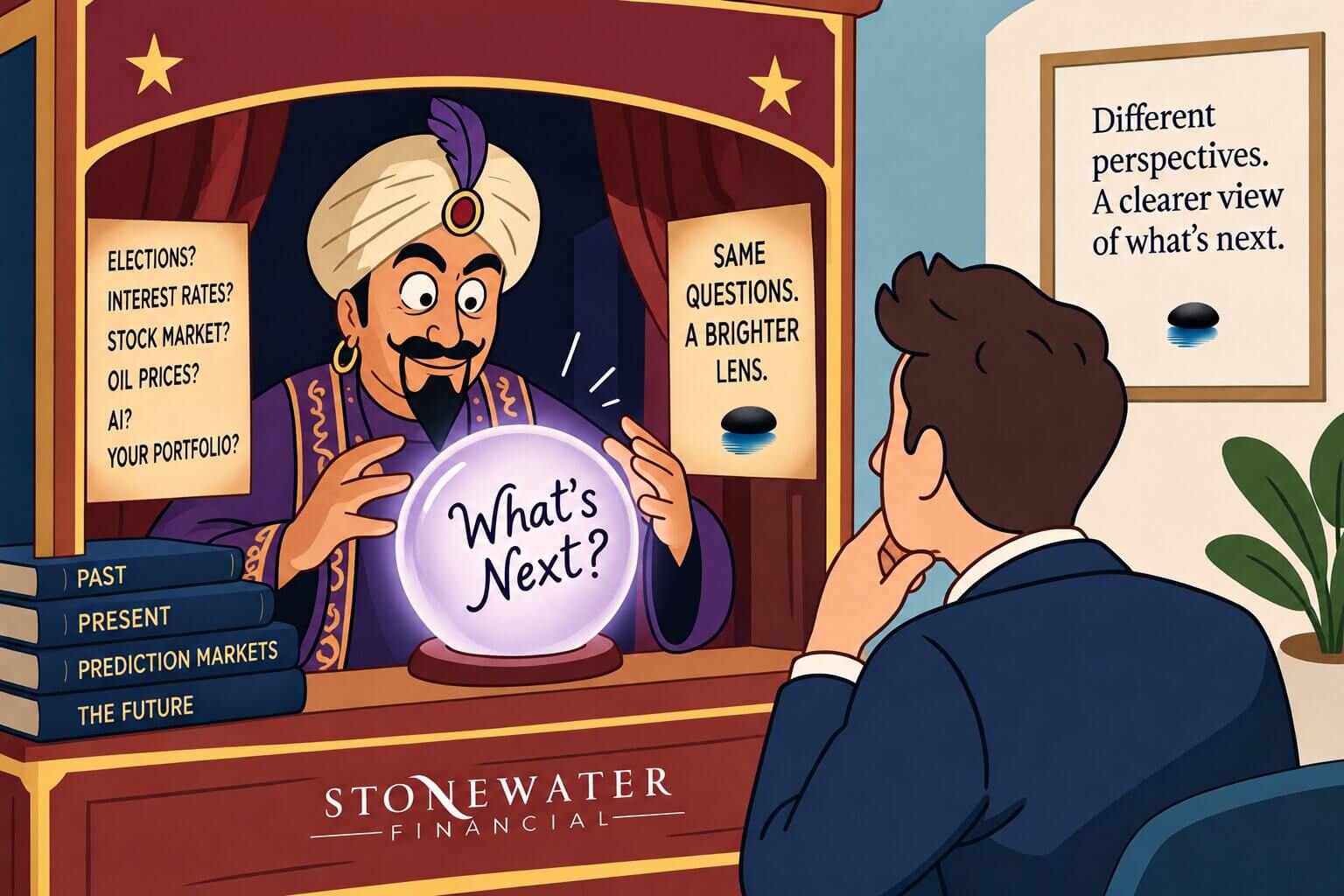
Prediction markets are beginning to do something similar with the future.
People have always wanted to know what comes next. Long before Wall Street, there were sages, oracles, fortune tellers and tea leaves. Today, we have television pundits, economic forecasts and social media experts who are never short on confidence, even when the evidence is.
Platforms such as Kalshi and Polymarket introduce a different way of thinking. Rather than merely asking people what they believe will happen, these markets require participants to put money behind their opinions. Prices then move as traders react to new information, creating a live estimate of how the market views the probability of an event.
The comparison to Moneyball is not that data makes people infallible. Baseball teams still lose games, highly rated prospects still disappoint and models still miss important details. The change was recognizing that evidence could challenge assumptions that had gone unquestioned for years.
Prediction markets challenge the traditional forecasting industry in much the same way. A television commentator can make a bold prediction and move on to the next segment. In a prediction market, an opinion receives a price that changes as new facts emerge and ultimately faces a measurable result.
Kalshi offers event contracts tied to real world outcomes and is regulated by the Commodity Futures Trading Commission. Polymarket operates markets in which prices emerge as participants trade with one another rather than having odds set by a single bookmaker. In both cases, the price reflects what participants collectively believe at a particular moment. Kalshi and Polymarket explain their respective market structures on their websites.
This does not make prediction markets crystal balls. A market with strong participation and informed traders may provide a useful signal, while a thinly traded market driven by headlines, emotion or rumor may be confidently wrong. The crowd can process information, but it can also chase it.
Artificial intelligence may make the process faster by reviewing enormous amounts of news, polling and economic data. The harder question is whether faster information leads to better decisions or simply allows people to make the same mistakes at greater speed. Technology can improve the signal, but judgment still determines what someone does with it.
For investors, a probability should be treated as evidence rather than instruction. If a prediction market suggests a strong likelihood of an interest rate cut, that does not mean an investor should rebuild an entire portfolio around that outcome. It means the market currently considers one scenario more likely than another, and that information may deserve a place alongside economic data, valuations, taxes, liquidity needs and long term goals.
That is the real lesson from Moneyball. The objective was not to replace human judgment with statistics. It was to make judgment better by questioning assumptions and using information more intelligently.
At Stonewater Financial, we take a similar approach. We pay attention to what markets are signaling, but we do not mistake a forecast for a financial plan. We consider how changing probabilities affect the client’s investments, cash flow, tax strategy, business interests, estate plan and family goals.
As wealth becomes more than a portfolio, the goal is not to predict every election, interest rate decision or market turn. It is to build a strategy that can succeed across several possible outcomes and adapt when the consensus proves wrong.
If you are looking for an advisory relationship that goes beyond predictions and brings your entire financial life into one coordinated strategy, schedule a complimentary 15 minute introductory call with Stonewater Financial. Better information can improve a decision, but only when it is connected to a plan built around you.
This material is for general informational purposes only and is not intended as personalized investment, tax or legal advice. Prediction markets and event contracts involve risk, may result in loss and are not appropriate for everyone. References to specific platforms are for illustration only and do not constitute an endorsement or recommendation. Consult your financial professional before making investment or trading decisions.