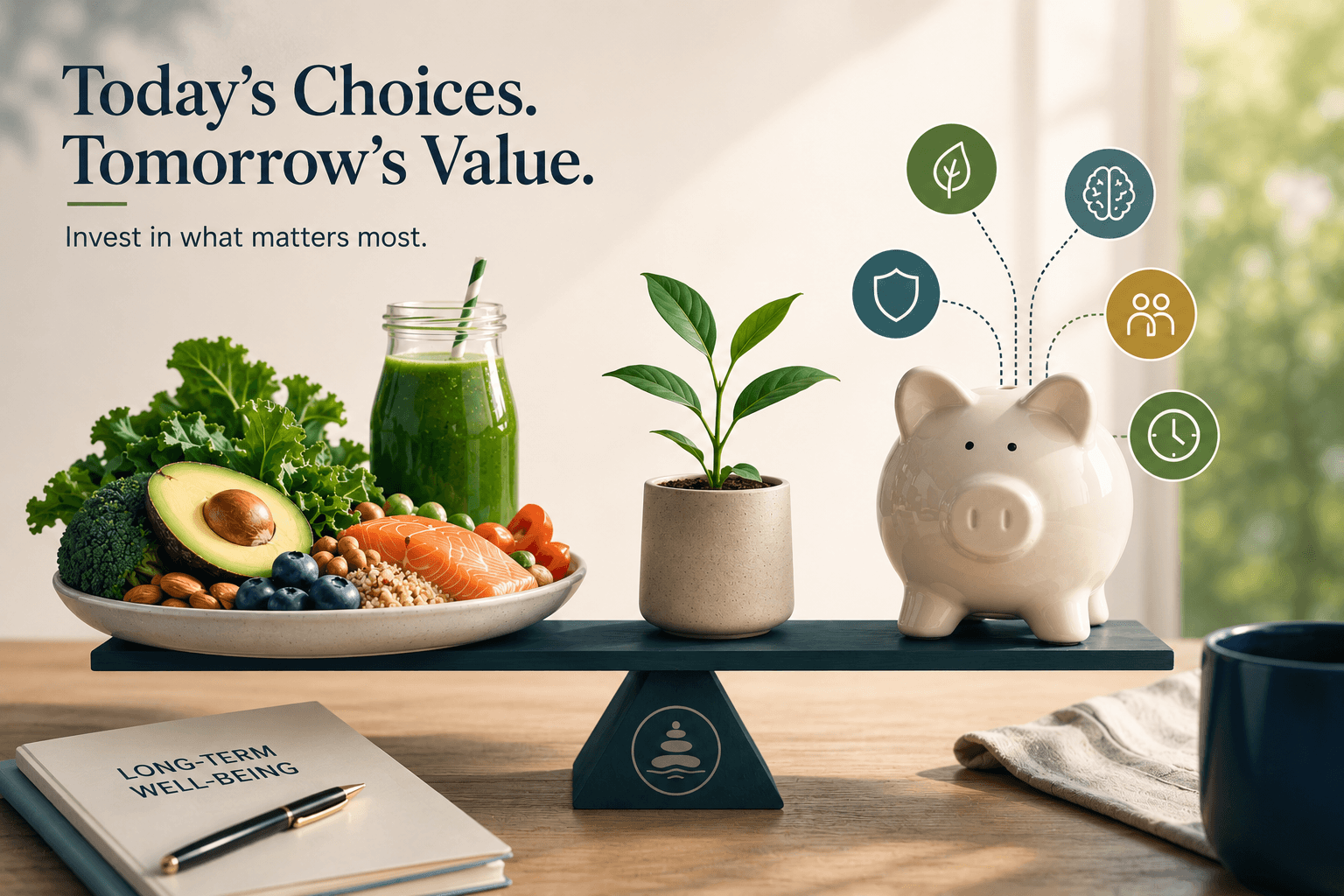
Because the most important asset in your portfolio isn’t your portfolio, it’s you.
Let’s address the organic elephant in the room: healthy eating can be expensive.
After all, when a salad costs more than a drive-thru combo meal and your weekly grocery bill starts looking suspiciously like a luxury handbag payment, it’s fair to ask: Is eating healthy really worth it?
For many successful women balancing careers, families, businesses, philanthropy, and everything else on their calendars, the answer isn’t simply about nutrition, it’s about value.
And like most worthwhile investments, the returns often aren’t immediate.
The Healthy Eating “Luxury Tax”
If you’ve ever walked out of Whole Foods wondering whether you accidentally financed someone’s college education, you’re not imagining things.
A landmark study from Harvard T.H. Chan School of Public Health found that healthier dietary patterns cost approximately $1.50 more per person, per day than less healthy alternatives. That translates to:
- Approximately $10.50 per week
- About $550 per year for one adult
- More than $2,000 annually for a family of four
In other words, choosing wild salmon over frozen pizza and berries over processed snacks does come with a higher price tag.
But then again, so do most investments with the potential for long-term appreciation.
Why Does Healthy Food Cost More?
Unfortunately, kale doesn’t benefit from economies of scale quite the way potato chips do.
Fresh produce, lean proteins, fish, nuts, and minimally processed foods require more labor, refrigeration, transportation, and have shorter shelf lives. Processed foods, by comparison, are engineered for efficiency, longevity, and convenience.
The result? Your grocery cart filled with organic vegetables and fresh fish often costs more than one filled with shelf-stable snacks and packaged foods.
Annoying? Perhaps.
Surprising? Not really.
Thinking Like an Investor
As women who have built successful careers, businesses, and investment portfolios know, focusing only on today’s price rarely tells the whole story.
The same principle applies to health.
A recent study published in JAMA Network Open followed more than 25,000 women over a 25-year period and found that those who adhered most closely to a Mediterranean-style diet experienced a 23% lower risk of death from all causes.
Other long-term studies have consistently linked healthier dietary patterns to lower rates of:
- Cardiovascular disease
- Type 2 diabetes
- Certain cancers
- Cognitive decline
- Premature mortality
In other words, while healthy eating may not improve your quarterly cash flow, it may improve the odds that you’ll actually enjoy the retirement you’ve spent decades planning for.
Healthy Doesn’t Mean “Spend Without Limits”
Of course, eating well doesn’t require shopping exclusively at boutique markets while purchasing artisanal chia seeds harvested under a full moon.
Some of the healthiest foods available are also among the most affordable:
- Beans and lentils
- Eggs
- Oats
- Brown rice
- Frozen fruits and vegetables
- Plain Greek yogurt
- Seasonal produce
- Canned salmon and tuna
The goal isn’t perfection.
It’s making thoughtful choices consistently over time, much like investing itself.
The Ultimate Long-Term Investment
As a wealth manager, I spend a tremendous amount of time helping clients optimize their portfolios, reduce taxes, preserve wealth, and plan for the future.
But perhaps the most overlooked asset allocation decision people make every day is what we choose to put on our plates.
Because while designer handbags, luxury vacations, and market returns may all bring enjoyment, none of them matter very much if we don’t have our health.
So yes, healthy eating may cost a little more today.
But viewed through a long-term lens, that extra $1.50 per day may ultimately prove to be one of the highest-return investments you’ll ever make.
And unlike your favorite handbag collection, this investment actually appreciates with time.
At Stonewater Financial, we believe good financial planning isn’t only about managing investments. It’s about evaluating everyday choices through a long-term lens. Whether you’re deciding how to save, invest, or even budget for groceries, understanding both today’s costs and tomorrow’s opportunities can help you build a stronger financial future.
Content in this material is for general information only and not intended to provide specific advice or recommendations for any individual.
All investing involves risk including loss of principal. No strategy assures success or protects against loss.
Sources
- Rao M, Afshin A, Singh G, Mozaffarian D. Do Healthier Foods and Diet Patterns Cost More Than Less Healthy Options? A Systematic Review and Meta-analysis. BMJ Open. 2013.
- Ahmad S, et al. Mediterranean Diet Adherence and Risk of All-Cause Mortality. JAMA Network Open. 2024.
- U.S. Department of Agriculture Economic Research Service. Are Healthy Foods Really More Expensive?
- Centers for Disease Control and Prevention. Nutrition, Physical Activity, and Chronic Disease Prevention.